3 Things You Need to Prioritize to Make Independent Reading Click AND Stick Next Year
You want independent reading to work in your classroom. Like, REALLY work. Not just "they're sitting there quietly for fifteen minutes" work, but actual, genuine, students-are-excited-about-books work.
I've been there. I know what it feels like to try independent reading, watch it fizzle out, and convince yourself that maybe your kids just aren't readers. But here's what I learned after years in a middle school reading classroom: independent reading doesn't fail because of your students. It fails because of a few key things that are completely within your control.
So if you're heading into next year ready to actually make this work, here are the three things you need to prioritize. Not ten things. Just three! Let's dive in.
1. Make the Time, Seriously!
This one is purely logistical, but it might be the most important thing on this list.
You have to MAKE THE TIME for independent reading. That means putting it first in your planning. Don’t wedge it in at the end of the period, don’t use it as a "you can read when you're done" filler activity, and definitely don’t treat it like something that only happens if everything else goes perfectly. Not only will you never give kids enough time to read, you’ll also send the message that reading isn’t the real important work.
Independent reading has to be non-negotiable time on your schedule. When students see that reading is protected time every single day, they start to take it seriously. They come in ready. They know what they're doing. The routine itself is half the battle.
So before you plan anything else for next year, carve out that time first. Put it on your schedule in ink. The rest of this works so much better when the foundation is solid.
2. Build a Reading Community
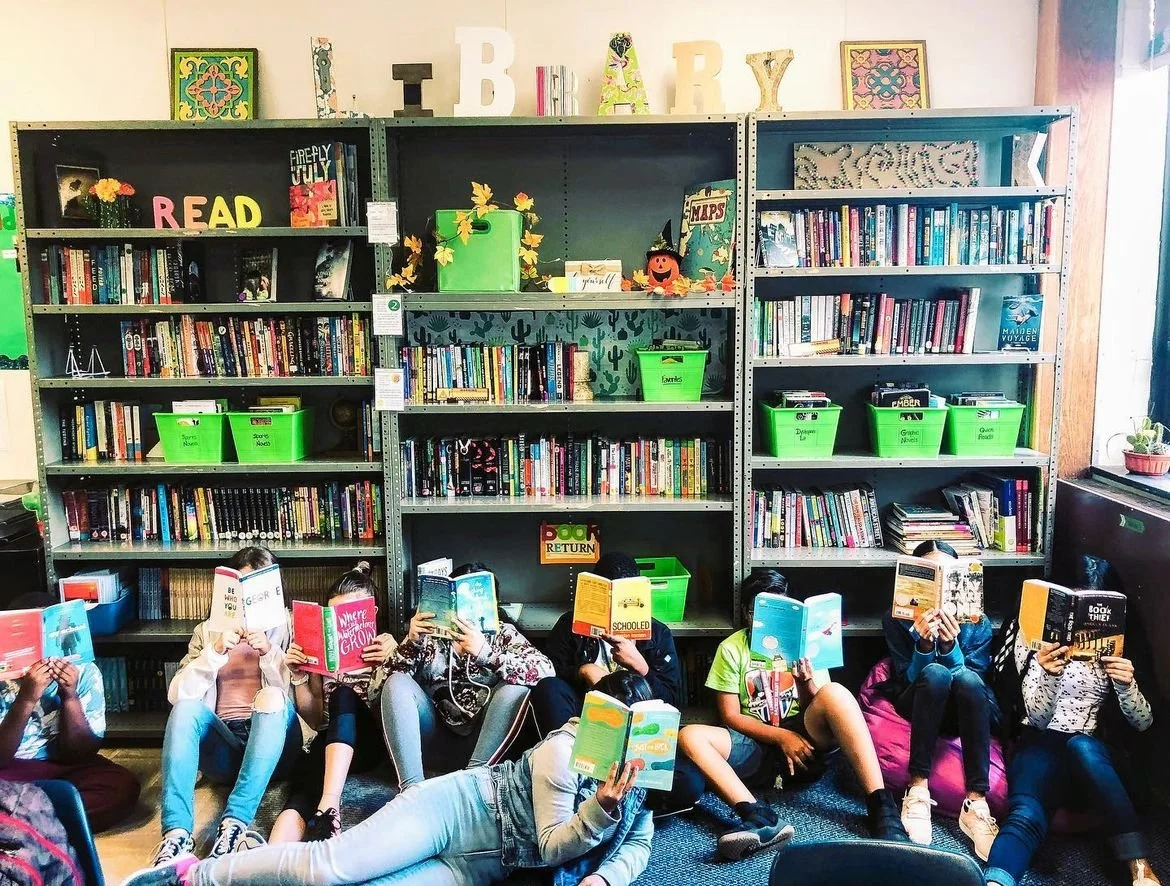
Here's the thing that took me a while to figure out: independent reading can't just be something students do. It has to be a way of being in your classroom.
There are a lot of strategies for building a reading community, but if I had to tell you to start with just one thing, it would be book talks.
Book talking great titles is SO FUN, and the energy it creates in a classroom is unlike anything else. Kids will be on the edge of their seats. They'll be grabbing books out of your hands before you even finish the read aloud. They'll be talking about titles with their friends. A well-done book talk creates a shared experience around books, and that shared experience is exactly what turns a room full of individuals into a reading community.
The key is being consistent. One to two book talks per week, every week. That's where the magic happens.
I'll be honest, though, I really struggled with consistency at first because book talks felt like one more thing to plan and prep. I'd forget plot details, fumble trying to find the right pages to read aloud, or blank on character names mid-talk. It was embarrassing, and it made me avoid doing them as often as I should have.
So I created my book talk guides to solve exactly that problem. My guides have every nitty-gritty detail I need, including character names, plot details, content flags for mature moments, and the best pages to read aloud. No more prep. No more fumbling. Book talking became genuinely zero-prep for me, and that's how consistency actually happened.
Check out my book talk guides here
3. Use an Accountability System That Doesn't Suck the Joy Out of Reading
Say it with me: kids need accountability. Even the kids who genuinely love reading. Especially the kids who are still figuring out whether they like it.
I get it; accountability and joyful reading feel like they shouldn't belong in the same sentence. But hear me out. The right accountability system doesn't kill the love of reading. The wrong one does.
Monthly book projects? Too much work, too much grading. Reading logs filled out at the end of the week? Easy to fake, zero relationship to actual reading. Those systems sucked the joy out of reading for me as a teacher, which meant they absolutely sucked it out for my students.
What actually worked? Page goals.
The concept is simple: students are graded on the pages they read each week. That's it. There's no book report, no elaborate project, no quiz. Just progress. They set a weekly goal, they track their pages, and I check in with them quickly using a simple grading system I can do on the spot.
It holds kids accountable without punishing them for the speed at which they read or the genre they chose. And it takes me almost no extra time to manage, which means I can actually sustain it all year long.
You’ve Got This!
Here's what I want you to remember: independent reading doesn't have to be complicated. It doesn't require a perfect classroom library or a huge budget or years of experience. It requires just three thing: protected time, a community built around books, and a simple accountability system that is fun and easy to maintain.
Make the time. Build the community. Hold them accountable.
You've got this. And next year? Your students are going to be readers.
XO,
Kara