Active vs. Passive Book Recommendation Strategies: How to Keep Every Kid Paired with a Great Book All Year Long
If you've tried to implement independent reading at all in your classroom, you already know that getting a kid to pick up a book is only half the battle. The REAL challenge is keeping them paired with the right book, week after week, month after month, all year long.
That's where book recommendation strategies come in. And here's what I've learned: you need BOTH active and passive strategies working together throughout the school year. Active strategies create big, exciting moments around books, the kind that make kids gasp and grab a title out of your hand. Passive strategies are quieter, but they're doing constant, steady work in the background, building a classroom culture where reading is just... what you do here. When you layer both kinds of strategies consistently, you create an environment where every student (even your most reluctant readers!!) can find their next great book. Let's break it down.
📚⭐️ Active Book Recommendation Strategies
Active strategies take a little more time and intention on your part, but they are absolutely essential to weave in on a regular basis. When you make time to actively talk about books in your classroom, you send a clear message to every single student: reading is fun and important.
BOOK TALKS
If you're only going to do one active strategy, make it book talks (AKA, book advertisements). I recommend doing them weekly (yes, really!) because consistency is what transforms a one-time fun activity into the kind of classroom culture where kids are genuinely excited about books.
A great book talk gets students on the edge of their seats. You share just enough of a title to make them desperate to read it: the hook, a compelling character moment, and a short read aloud that leaves kids wanting more. Done well, book talks create a shared classroom experience around books that is the foundation of a real reading community.
The key to making them sustainable? My Book Talk Guide Volumes. Each guide contains everything you need for a zero-prep book talk: character names, plot details, content flags for mature moments, and the best read-aloud passages already found for you. No more fumbling through books trying to remember what happens. You just open the guide and go.
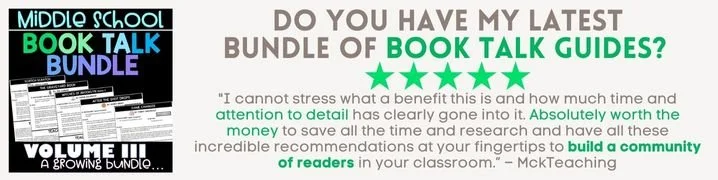
🚨⭐️ If you want to check out a sample book talk guide before diving in and purchasing, HERE’S a FREEBIE. 🚨⭐️
BOOK TRAILERS
These are a fantastic low-effort way to build buzz around titles. A quick search on YouTube for "[book title] book trailer" will pull up professionally made video trailers for tons of middle grade and YA novels. Think movie-trailer style clips that genuinely get kids hyped. Pop one on the screen when you have a couple minutes at the start of class. It's a zero-prep way to let a book sell itself.
1:1 Recommendations Using the BIG BOOK LIST
Sometimes a student needs you to look them in the eye and say, "I have the perfect book for you." These personalized moments are SO powerful for reluctant and struggling readers. A tailored recommendation from a teacher they trust can be the thing that changes everything.
My Big Book List makes this easy. It's a searchable, ever-growing spreadsheet of 125+ hand-curated titles for grades 5–9, organized by grade level, genre, format (graphic novels, novels in verse, traditional prose), and theme. There's even a special Reluctant Reader-Approved label for the titles proven to hook even the most resistant readers. When a student drops another book in the return bin, you won't have to panic. You'll have exactly what you need to make the next rec!

BOOK TASTINGS
I like to do book tastings quarterly. They're a bigger investment of class time, but the payoff is enormous. A book tasting is essentially a structured activity where students get to "sample" multiple books at stations before choosing what to read next. The energy in the room is always incredible.
I have a few different options depending on your style (and it’s fun to change it up throughout the year):
Traditional Book Tasting & Book List — Comes with instructions, curated book lists, and recording sheets. Everything you need to run a smooth, engaging tasting from start to finish
Book Tasting BINGO — A fun twist on the traditional format! Students play BINGO as they sample books, which adds a game-show element that middle schoolers absolutely love.
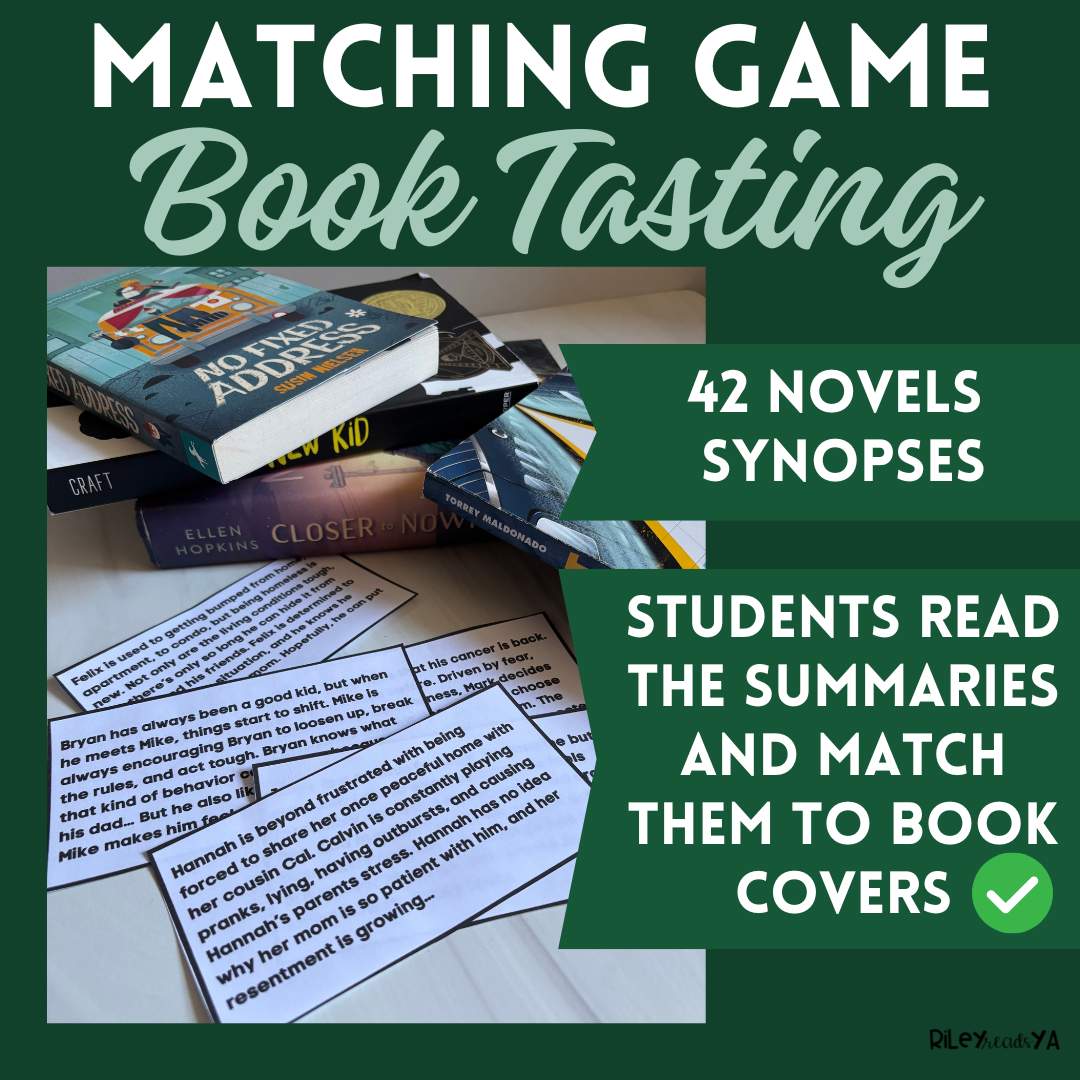
Book Tasting Matching Game(NEW!) — This one is SO fun. Students match books to descriptions, clues, or characters. It’s a fresh, interactive format that makes the sampling experience feel like a game rather than a worksheet. It really engages students, and you can make it a cooperative, small group experience.
Use Your School Librarian
This one is free and wildly underutilized! Your school librarian is a book expert who would love to be more involved in your classroom. Invite them in to do a book talk, or schedule a class visit to the library and ask them to help pair students with titles. This also reinforces to students that the library is a resource they should be using, not just a quiet place to sit.
📖❤️ Passive Book Recommendation Strategies
Passive strategies are subtler than active ones, but don't let that fool you. They are just as critical. These are the strategies that build an immersive, books-everywhere culture in your classroom. They work quietly in the background every single day, reinforcing the message that reading is simply part of who you are as a class. They also pick up the slack when class gets busy and active recommendation strategies have to take more of a backseat. Do not underestimate their power.
A "CURRENTLY READING" Sign
This is SO important and costs you nothing. Keep a small sign or display near your whiteboard where you show students what you're currently reading. When kids see that you're mid-book, when they can watch you make progress week to week, it models that reading is a real, ongoing, joyful part of life. Not just a school task. It’s a habit. A lifestyle.
Books in Unexpected Places
Create little moments of book discovery throughout your classroom by keeping small stacks or mini displays in unexpected spots. (Next to the assignment turn-in bin, by the classroom sign-out sheet, near the door.) Students who would never normally browse your library shelf will absentmindedly pick up a book while they're waiting to turn something in. These little touchpoints build a culture of readers without anyone even realizing it's happening.
Book-Related CLASSROOM DECOR
Your walls and bulletin boards are real estate! Use them to talk about books! Here are a few of my favorites:
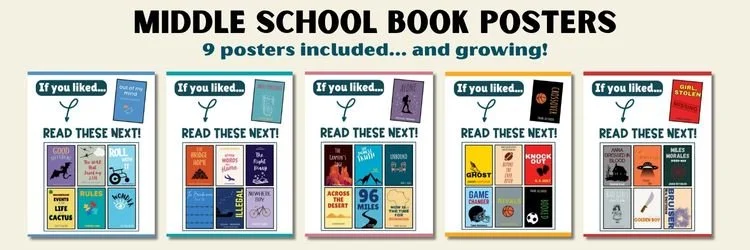
If You Liked... Middle School Book Posters(NEW!) — These posters use popular titles students already know and love to point them toward their next great read. A student who loved The Hunger Games sees a poster and discovers three books they'd never have found on their own. Genius in its simplicity.
Book Recommendation Posters — Beautiful, ready-to-print posters that highlight great middle grade titles. These are the kind of thing students actually stop and read while they're waiting for class to start.
Goodreads Student Profile Bulletin Board Display(FREE!) — Students create their own Goodreads-style profile to display on your bulletin board, showing what they've read and what they want to read next. It turns your wall into a living, breathing recommendation engine powered by your own students.
Book Tree Ornaments — A seasonal twist! Students create ornaments for books they'd recommend and decorate a classroom "book tree." It's festive, fun, and sneakily gets kids advertising their favorite titles to each other.
Scary Good Books Bulletin Board Display(FREE!) — A Halloween-themed book display that highlights spooky and suspenseful reads. Seasonal displays are a fantastic way to keep your classroom feeling fresh and current, and this one doubles as a reading recommendation tool.
Student Recommendation Tools
Some of the most powerful book recommendations come from other students, not from teachers. Peer recommendations hit differently at this age! These tools put the recommending power in students' hands in age-appropriate, structured ways:

Book Flags — One of my best-sellers, and for good reason. Students fill out a simple "book flag" for a title they loved, and those flags get attached to the books in your library. When another student picks up that book, they see their classmate's recommendation right there on the cover. It's peer-to-peer marketing for reading, and it WORKS.
Student Book Talk Template — Give students the chance to do their own book talks using this guided Google Slides template. It’s highly structured and scaffolded to avoid rambling book synopses. (IYKYK) Kids get to present a book they loved to the class, practice real communication skills, and convince their peers to pick it up next! Doing these is always a highlight of the year.
A Neat, Organized Classroom Library
I know this feels obvious, but it genuinely matters. If your library is a pile of books in random bins, students aren't going to dig through it looking for something great. A clean, organized, visually appealing library invites browsing.
Classroom Library Labels — These secondary-specific labels will help you organize your library by genre, theme, or format so students can actually find what they're looking for (and stumble upon something they didn't know they were looking for!).
Rotating book displays — Every month or so, pull a handful of titles and prop them up facing out in a small display somewhere in your room. New titles in visible spots = students noticing books they'd otherwise overlook. So simple, so effective.
Fun Incentives
A little extrinsic motivation never hurt anyone, especially when you're still building a reading culture.
Genre BINGO(FREE!) — Students track their reading across different genres on a BINGO card. You can offer a small prize for BINGO if you'd like (ideas listed in the resource), or just let the tracking itself be the reward. It's a fun, low-stakes way to nudge students toward reading outside their comfort zones.
Jolly Ranchers — Okay, this one isn't a product, but I'm including it because sometimes the most powerful incentive is just a piece of candy at the end of a great silent reading session. Never underestimate the power of Jolly Ranchers. 🍬
You don't have to do all of these things at once. That would be overwhelming and unsustainable. But pick a few from each category and commit to them. Let active strategies create the excitement and the energy. Let passive strategies do the quiet, steady work of building a culture. Together, they'll make your classroom a place where every student can find a book they can't put down.
XO,
Kara