The Page Goals System That Gets Kids Reading
You know the feeling. You've carved out time for independent reading. Students have books. The room is quiet. And somehow, you still have that nagging suspicion that half your class is not actually reading.
You are not alone. Accountability in independent reading is one of the hardest things to get right. Reading logs feel punitive. Plot summaries kill the joy. And most grading systems for reading send exactly the wrong message to kids who are already on the fence about books.
Here’s what actually works: (and I know because I’ve tried it all!)
Page goals!! And once you try them, you will wonder how you ever managed your reading classroom without them.
What Is a Page Goal System?
A page goal is exactly what it sounds like: a personalized weekly reading target, set individually for each student based on their own natural reading pace. Every Monday, you check in with students. Every Monday, you assign a new goal for the following week. That’s it!
No logs. No summaries. No sticky notes. Just a simple, quick accountability check that keeps students reading at a healthy, consistent pace without making reading feel like a chore.
The best part is that students buy really into it. Even my most reluctant readers kept up with their page goals!
Why Page Goals Work
Before we get into the how, let's talk about the why. Because there are a lot of systems out there for managing independent reading, and most of them have one thing in common: they accidentally make reading harder to love.
Reading logs, book projects, sticky note annotations. These things are not bad on their own, but when they become the thing we are grading, we have lost the plot a little. The goal of independent reading is to get kids reading more. Not to get kids filling out more paperwork. Page goals keep the focus exactly where it belongs: on moving through books.
Here is why this system works so well.
First, page goals make reading the real work. Instead of grading a log or a project, you are grading the actual reading. Did the student move through pages this week? That is the question. Everything else is just noise. When you strip away the busy work and reward the reading itself, students get the message: reading is the point.
Second, page goals are incredibly easy to maintain all year long. Setting up the system takes one class period. After that, the weekly check-in takes just a few minutes per class. You can grade everyone in the time it takes to do roll call. For teachers who are already stretched thin (ie. everyone!!), this kind of sustainability is everything. It is a system you will actually stick with, and that consistency is what makes it work.
Third, and this one might surprise you, page goals genuinely improve students' enjoyment of reading. A huge part of loving a book is momentum. When students read at a healthy pace, they get pulled into the story more quickly. They do not forget characters or lose track of the plot. They stay connected to what they are reading, and that connection is what turns a reluctant reader into a kid who actually looks forward to picking up their book. Better pace leads to better comprehension, and better comprehension leads to more enjoyment. It is a cycle that builds on itself.
How to Get Started
Getting the page goal system up and running takes one class period and a little bit of organized chaos. Here is how it works.
First, you set individual page goals with each student. Give everyone a traditional novel (not a graphic novel or verse novel for this particular activity), set a ten minute timer, and let them read. When the timer goes off, students do some quick math to figure out their weekly page goal based on how many minutes they read at home each week. Have calculators on hand, because no matter how clearly you explain the directions, there will be confusion. It is part of the process. Walk around, help students out, and keep it light. The goal here is to land on a realistic, personalized number for each student.
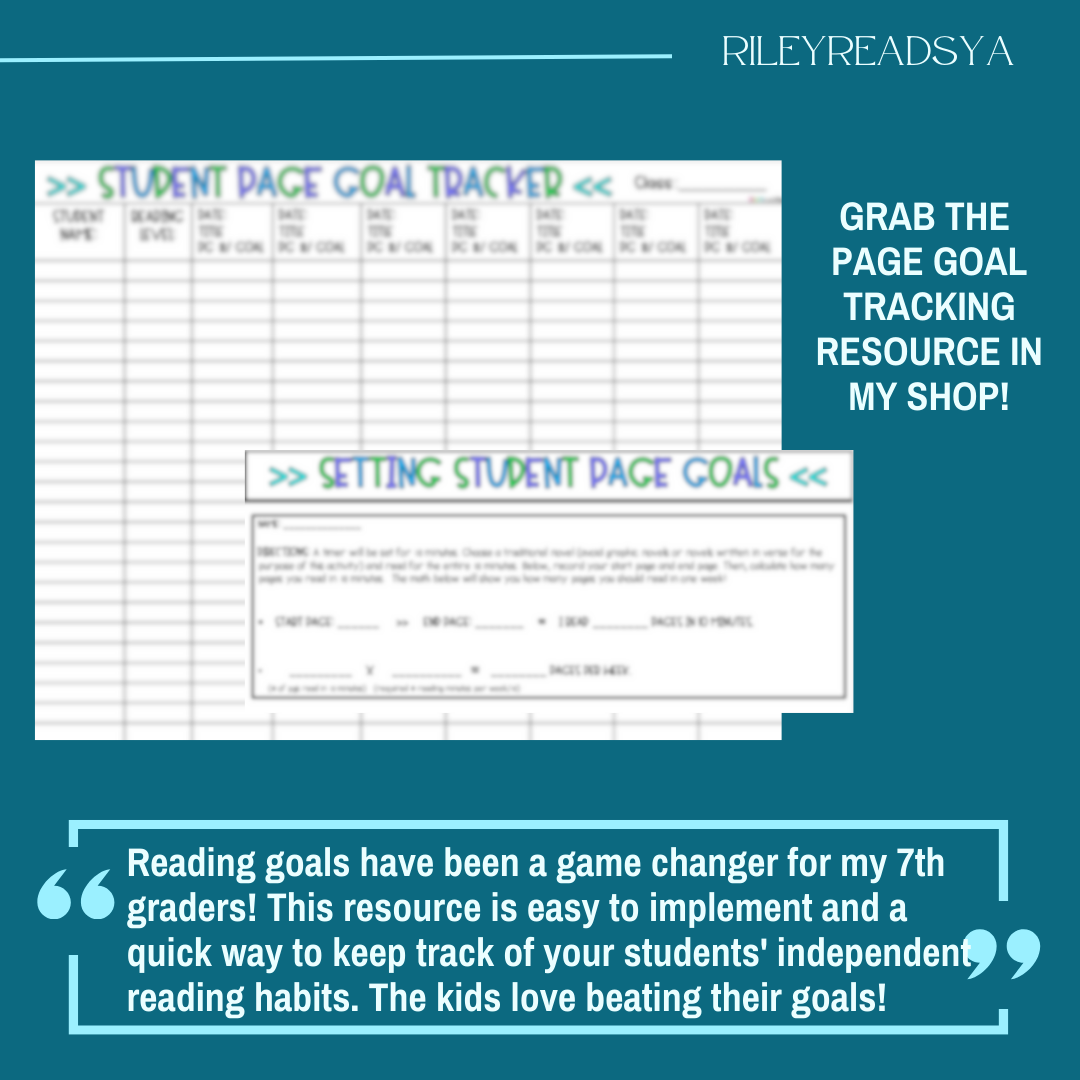
Second, you start tracking. The Page Goal Tracker is the real workhorse of this system. You will want several copies on clipboards, one set per class. Every Monday, you do a quick roll call. When you call a student's name, they tell you their book title (or "same" if they are still reading the same one) and the page they are on. You jot it down, give them their new goal, and move on. The whole check-in takes just a few seconds per student. Grading is as simple as glancing at the previous week's entry to see if they hit their goal.
One entry might look something like this: Restart p.110/p.200. Clean, fast, and all the information you need.
Why This System Works for Reluctant Readers
Most accountability systems for independent reading backfire with reluctant readers because they add pressure and take the fun out of it. Page goals are different because they meet students where they are. A student who reads slowly gets a smaller goal. A student who devours books gets a bigger one. No one is set up to fail, and no one is bored.
The individualized nature of the system also sends a powerful message to reluctant readers: your teacher sees you. Not as a class, but as a person with your own pace, your own book, and your own goal.
Grab the system HERE.
Want to See It in Action?
If you want a deeper look at how to set up and run a page goal system from start to finish, I made a mini workshop just for you! It walks you through everything step by step, including exactly how to launch the system, how to manage it week to week, how to handle dishonesty (and prevent it in the first place), and how to build the kind of reading culture that makes all of this click. I’ve had success with this system for so many years, and I share exactly how I made it happen!
Find the mini workshop HERE.
Grab the system, trust the process, and get ready to actually enjoy your independent reading block again. You have got this.
XO, Kara