The Book Talking Formula That Turns Reluctant Readers Into Book Lovers
If you’re anything like I was, you want your students to love reading. You’ve stocked your classroom library with great books. You’ve carved out independent reading time. And still, so many of your students are staring blankly at the shelf, picking up a book, putting it back down, and telling you they "have nothing to read."
The missing piece almost always comes down to one problem: You don’t have a system in your classroom for consistently advertising great books.
I’ll be honest, teachers have an uphill battle. Kids are addicted to tech, and books struggle to compete. But books have a chance after you start implementing a book talking routine.
I have said it before and I will say it again: Book talking changed my life as a teacher. It was one of the first consistently meaningful things I did with my students because the effects lasted long after kids left my classroom. I have watched the toughest, too-cool-for-school kids turn into students eagerly whisper-giggling about a scene from a novel. I have watched reluctant readers become the ones begging to be first on the waitlist for a book. That is the power of a great book talk.
If you have never tried it, or you have tried it once and let it fall off your radar, this post is going to walk you through exactly how to make book talking a simple, sustainable part of your classroom routine.
Why Book Talking Works
A book talk is essentially a live advertisement for a book, and it works because YOU are doing the selling. Kids do not have the ability to browse a shelf and pick the right book for themselves (heck, hardly any adults can do this!)
Kids need SO MUCH support in choosing good books, and we can provide it through book talking (among other strategies. Read about the others here). Your students will often decide what to read next based on who recommends it and how excited that person seems. When you book talk a title with real enthusiasm, you are handing your students permission to get excited about reading too.
Pick a Date
It sounds small, but choosing a consistent day is what makes book talking stick. I do mine on Book Talk Tuesdays (the alliteration is just too good to pass up). Some teachers love First Chapter Fridays instead. Whatever you choose, a fun, consistent name helps build a genuine sense of reading community in your room, and it gives students something to look forward to every single week.
Pick Your Book Carefully
This is the most important decision you will make. Be selective. You want titles that are genuinely engaging and will hook a wide range of readers, not just the kids who already love to read. Start with a book you know will appeal to most of your class so you get buy-in early, then branch out into different genres, reading levels, and protagonists as the weeks go on. Below are some winners in middle school.
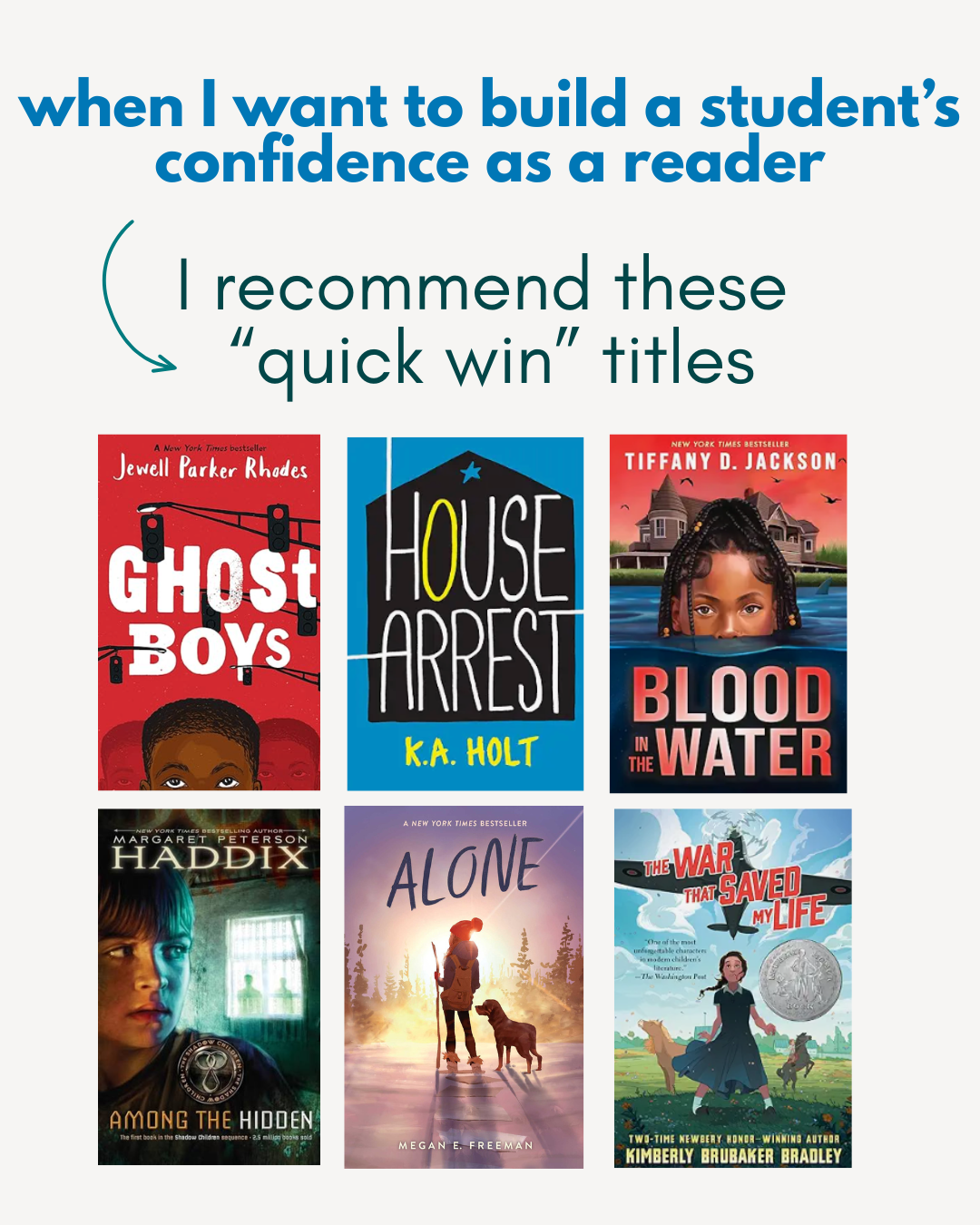
These titles are highly engaging and represent a good variety of genres.
I’d recommend these titles to grades 5-7!
The Anatomy of a Book Talk
Once you have your date and your book, here is the formula I have used for years:
Show the cover. Hold up the actual book or display the cover on a slide. Read the title and author out loud with real enthusiasm. I always say something like "I am SO excited to share this one with you!"
Read the back cover. This is also the exact habit you want to model for students when they are browsing on their own. Fill in a few extra plot details as needed, especially if the back cover summary is not very strong. (I write my own book summaries in every book talk guide I create because I don’t always love what’s on the book.)
Give context beyond the plot. Share a little about the protagonist or any narration shifts students should know about before you start reading.
Do a read aloud. Pick the most engaging few pages, not necessarily the first chapter. Sometimes chapter one is all setup, and you want your students hooked, not just informed.
Mention maturity and reading level. Give students a general sense of who the book might be right for. I never tell a student they cannot read something. I just help guide them toward books that are a good fit.
Let the magic happen. Have a simple system ready for the inevitable demand, like a Have Read/Want to Read list in student notebooks so students can build their TBR and always have a list of great titles to choose from when they need their book (download mine FREE here), or a lottery system for who gets to check the book out first.
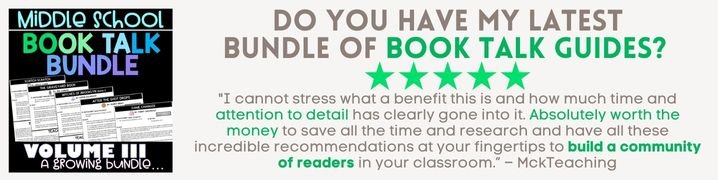
If you’re reading this list thinking, but how will I know all this information about every book I want to book talk?? I’ve got you covered. That question is the exact reason I started creating my book talk guides. They’re my best-selling resources for a reason; they contain all of the information above and MORE. Every book included in my guides is highly engaging, and I know they will help build your students’ trust in YOU as an expert recommender. Check them out HERE.
The Most Important Ingredient
Here is the part most teachers miss. It is not the book. It is not even the read aloud passage you chose. YOU are the most important ingredient in any book talk. Your students look up to you and they absorb your energy. Even if you feel nervous or unsure, bring your most enthusiastic self to the moment. (Having book talk guides will boost your confidence, as will practice!) Just smile big, read with expression, and hype up every single book you share. When your students see how excited you are, they get excited too.
And, remember, if the idea of prepping a book talk from scratch every week feels like one more thing on your overflowing plate, I get it. That is exactly why I created my Book Talk Guides. Each one hands you the protagonist info, plot summary, suggested read aloud pages, and maturity notes so all you have to do is open it and go. No extra reading, no extra planning, just pull one out and watch the magic happen.
If you are ready to make book talking a real, sustainable part of your classroom, grab a set of guides and let me do the hard work for you.
Let me know how they go!!